(757) 552-6055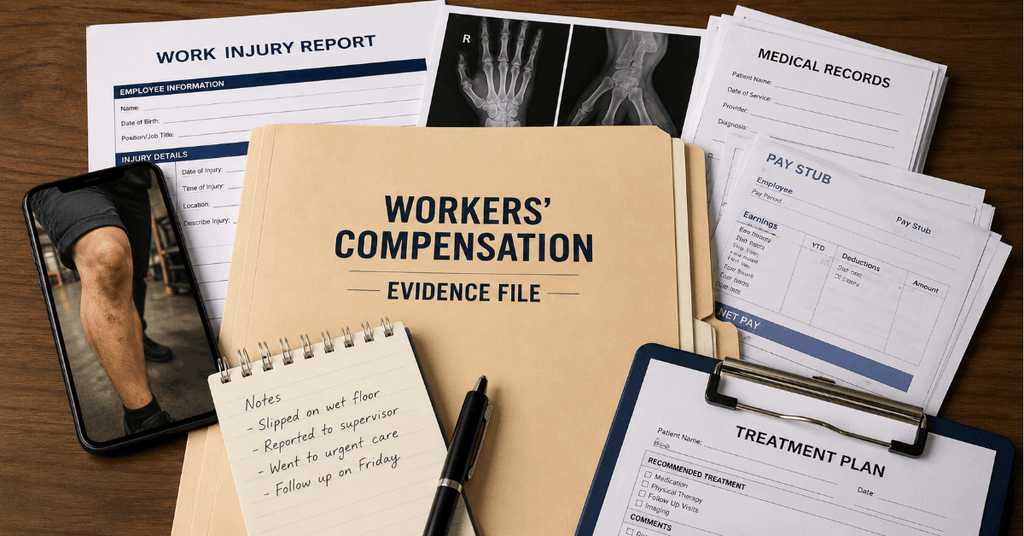
A workplace injury can happen in an instant, but proving that you qualify for workers’ compensation benefits often takes much longer. After reporting an injury and seeking medical care, many Virginia workers often assume that benefits will automatically follow. Unfortunately, insurance companies frequently scrutinize claims, question the severity of injuries, or argue that an accident was unrelated to work.
The evidence that you gather after a workplace accident can make a significant difference in the outcome of your claim. Strong documentation helps to establish that your injury occurred during the course of your employment, demonstrates the extent of your injuries, and supports your entitlement to wage replacement and medical benefits. Evidence such as medical records, an injury report, doctors’ opinions, and expert witness testimony can all provide strong support for a workers’ compensation claim.
Poole, Brooke, Plumlee represents injured workers in the greater Virginia Beach area who have been hurt at work. We work hard to help our clients get the benefits that they are entitled to under Virginia law for their workplace injuries and occupational illnesses. Reach out to our law firm today to schedule a confidential consultation with a Virginia Beach workers’ compensation attorney.
Why Evidence Matters in a Virginia Workers’ Compensation Claim
The Virginia workers’ compensation system is designed to provide necessary medical, wage replacement, and other benefits to injured workers without requiring them to prove employer negligence. It is considered a no-fault system, meaning injured employees can receive benefits even if their employer didn’t do anything wrong.
However, if you are hurt at work, you still have the burden of proving several important facts, including:
- You suffered an injury in a workplace accident or developed an occupational disease covered by Virginia Workers’ Compensation law.
- The injury arose out of and occurred during your employment.
- Your medical condition resulted from the workplace accident.
- Your injury requires medical treatment and/or prevents you from working.
Insurance carriers often investigate claims thoroughly before approving benefits. If documentation of a workplace injury is incomplete or inconsistent, they may delay, reduce, or deny your claim altogether.
The stronger your evidence, the more difficult it becomes for an insurer to dispute your case. The following types of evidence can be particularly useful when it comes to proving your workers’ comp claim.
Immediate Injury Report
One of the first and most important pieces of evidence is your accident report. Virginia law generally requires injured employees to notify their employer of a workplace injury promptly. Waiting days or weeks to report an accident can create doubt about when or how the injury occurred.
When reporting your injury:
- Explain exactly what happened.
- Identify where the accident occurred.
- Describe every area of your body that was injured.
- Report symptoms even if they seem minor.
Some injuries, such as back injuries, concussions, and repetitive stress conditions, become worse over time. If you fail to mention symptoms initially, insurers may later argue that they were unrelated to your workplace accident. Make sure that you keep copies of any written reports, emails, or incident forms that you complete.
Medical Records Are Often the Most Important Evidence
Medical documentation forms the backbone of nearly every workers’ compensation claim. Your medical records establish:
- The nature of your injuries
- Your diagnosis
- Recommended treatment
- Work restrictions
- Recovery progress
- Permanent impairment, if applicable
The sooner you receive medical treatment after your accident, the easier it becomes to connect your injuries to the workplace accident. You should also be sure to:
- Attend every medical appointment.
- Follow your doctor’s recommendations.
- Complete prescribed therapy.
- Inform your doctor about all symptoms.
- Avoid exaggerating or minimizing your condition.
Insurance companies frequently compare medical records throughout a claim. Consistent reporting helps to strengthen your credibility.
Doctor’s Opinions Carry Significant Weight
In addition to medical records, your treating physician’s opinions often determine whether benefits may continue. Doctors may provide opinions regarding:
- Whether your injury resulted from your work accident
- Whether you can perform your job
- Temporary work restrictions
- Whether you have reached maximum medical improvement
- Permanent disability ratings
Clear medical opinions supported by examinations and testing are often critical if the insurance company disputes your claim.
Diagnostic Testing
Objective medical evidence can be especially persuasive. Common diagnostic tests include:
- X-rays
- MRI scans
- CT scans
- EMG and nerve conduction studies
- Ultrasounds
- Laboratory testing
These studies may confirm features such as herniated discs, torn ligaments, nerve damage, or other injuries that cannot be seen externally. Although not every injury appears on imaging studies, objective testing often provides strong support for your claim.
Witness Statements
Although you are not required to prove fault, if the insurance company challenges the link between your injury and a workplace accident, witness testimony can become important. Coworkers who witnessed your accident can provide valuable evidence about:
- How the accident occurred
- Immediate complaints of pain
- Your physical condition before and after the accident
Even employees who did not directly observe the accident may confirm that you immediately reported your injury or appeared injured afterward. Whenever possible, obtain witness names and contact information early, while memories remain fresh.
Photographs and Videos
Visual evidence can help tell the story of your workplace accident. Again, this may become critical if the insurance company disputes your claim.
Photographs of the accident scene and visible injuries such as bruising, cuts, burns, or swelling can be useful to support your claim. Photographs documenting your recovery over time can also be used to illustrate the severity of your injuries. If surveillance cameras captured the incident, your attorney may be able to obtain that footage before it is erased or overwritten.
Employment Records
Your employment records help to establish your earnings and work history. Pay stubs, wage statements, timesheets, attendance records, personnel files, and job descriptions may all become important in certain situations.
These documents can help to determine:
- Average weekly wages
- Temporary disability benefits
- Lost income
- Return-to-work options
Accurate wage information is especially important because workers’ compensation benefits are calculated based on your earnings.
Communications with Your Employer
Save copies of all communications related to your injury. This includes:
- Emails
- Text messages
- Written notices
- HR correspondence
- Return-to-work instructions
These records can later be used to prove facts such as:
- Whether you reported the injury
- Whether accommodations were offered
- Your employer’s knowledge of your condition
- Disputes related to work restrictions
Maintaining an organized file can prevent misunderstandings later.
Your Own Notes
Many injured workers underestimate the importance of keeping a personal journal. Recording the following can be useful:
- Daily pain levels
- Medical appointments
- Medications
- Physical limitations
- Missed workdays
- Conversations with insurance adjusters
- Recovery milestones
Because workers’ compensation claims sometimes take months to resolve, contemporaneous notes may refresh your memory if you later testify.
Expert Testimony
Some cases require testimony from experts beyond your treating physician. Depending on the circumstances, experts may include:
- Medical specialists
- Vocational rehabilitation experts
- Occupational medicine physicians
- Economists
Expert testimony can be especially valuable when insurers dispute permanent disability or your ability to return to work.
Help for Injured Workers in Virginia Beach
If you were injured on the job, you shouldn’t assume that your claim will be approved simply because the accident happened at work. Building a successful Virginia workers’ compensation claim often depends on presenting clear, consistent, and well-documented evidence of your injury from the very beginning.
At Poole, Brooke, Plumlee, we help injured workers throughout Virginia protect their rights, gather the evidence needed to support their claims, and pursue the workers’ compensation benefits they deserve. If your claim has been denied, delayed, or challenged by the insurance company, we can advocate for your rights. To learn more, call us at 757-499-1841 or fill out our online contact form to talk to a Virginia Beach workers’ compensation attorney.